

Weekend roundup: When everything Is perimenopause, what is perimenopause?

The menopause space has more than its share of beef, and nowhere is it more prominent than when credentialed researchers and doctors question the prevailing narrative, which on some days looks a lot like Feminine Forever 2.0-era Estrogen Maximalism.
But they do. They really do.
That’s why I’m devoting a few words to a long, sharp piece in Mad In America, a new-to-me publication, on what happens when every midlife symptom gets funnelled into one diagnosis.
Inside the Hot Flush Gold Rush: The Medicalization of Menopause Spreads to Perimenopause traces ‘menopause as central life disaster’ marketing and follows Jean Hailes’ chief executive officer Sarah White watching younger and younger women arrive convinced perimenopause explains everything — while other, treatable root causes go unexamined.
Just yesterday I saw someone calling ‘being easily startled’ a perimenopause symptom. Perhaps; or is it a sign of a nervous system and brain in the middle of The Upgrade, as neuroscientist Louann Brizendine so brilliantly called it in her 2022 book? One is a problem to be fixed, the other is a temporary situation that will pass, perhaps with some support.
As the Mad in America article suggests, you’d be hard-pressed to find an influencer or doctor building a massive following based on a good experience. If it bleeds it leads – journalism 101. I realized early on in Hotflash inc as I watched accounts surge past mine that going all-in on hormone therapy was the path to much bigger growth, but I could not do it. Nor could I trade in fear and misery, knowing what I know. (Hence the “this is going somewhere good” tagline). And as White says: “People don’t go online and say, ‘Hey, menopause was fantastic.’” They do, but rather than entire accounts, it’s usually a fraction of the content older woman living their best lives produce.
Martha Hickey is a Melbourne OB-GYN who’s been an evidence-based countervoice on this for years, and made an appearance on the Hotflash inc Podcast (Her 2022 episode is titled “Menopause IS normal”). She told Mad in America that menopause “is a little bit like pregnancy. It’s a normal thing, and usually it’s fine. Sometimes it goes wrong, and when it goes wrong, that person needs help”.
I believe that taking women seriously does not mean handing them a hormone prescription for every complaint and calling it liberation. Asking questions about this narrative is not a “takedown”. Let’s remember: the focus of mainstream medicine is on using medicine to treat symptoms. And for those of its doctors who aren’t awake to how problematic this can be, sometimes, eye rolling is the response to questions about finding a ‘root cause’.
I’d argue that the most feminist thing a responsible clinician can do is say “let’s rule out whether something else is going on, first”. I’ve tracked at least 12 approaches to prescribing hormone therapy in my Hot Truth About Hormone Therapy guide (I say at ‘least’ because I’m sure another has emerged in the month since it launched). This is relevant because several of them either tread lightly with estrogen or don’t use it, and one of them is not to prescribe hormone therapy at all. Why? Because whether it’s Traditional Chinese Medicine’s focus on the kidneys or those who argue convincingly that misfiring energy production is the real issue, common sense tells us there are many paths through this. There are too many happy, healthy old ladies out there who don’t take hormone therapy for all the dire predictions to be true.
This is exactly what I’ve been talking about more openly lately, including on Instagram: one was a live with Melanie Mancil, a nurse who has a telehealth business in California that sells hormone therapy, and Stacy London, who very generously hosted a live to talk all about The Hot Truth About Hormone Therapy.
The commercial incentive doesn’t deal with nuance very well, because it boils a complex transition down into a simple problem – hormone deficiency – with a paid-for solution. A lot of people don’t seem to be able to see that, whether it’s because they are deeply embedded and invested in the structure that exists, or they have placed their faith in people who are, or they have been so helped by hormone therapy they think everyone else will be.
HF inc context: Mad in America is a webzine founded in 2012 by Robert Whitaker, an award-winning medical journalist and author of Anatomy of an Epidemic. Its defining orientation is non-partisan, anti-establishment skepticism of mainstream medicine – specifically psychiatry, making it heterodox. More recently the site has been repeatedly pulled into the Make America Healthy Again orbit associated with RFK Jr., but Whitaker has publicly and pointedly rejected the MAHA label. This is a good illustration of a broader pattern: question the mainstream medical narrative from any direction and you tend to get sorted into MAHA – regardless of where you actually come from.
Here comes the science
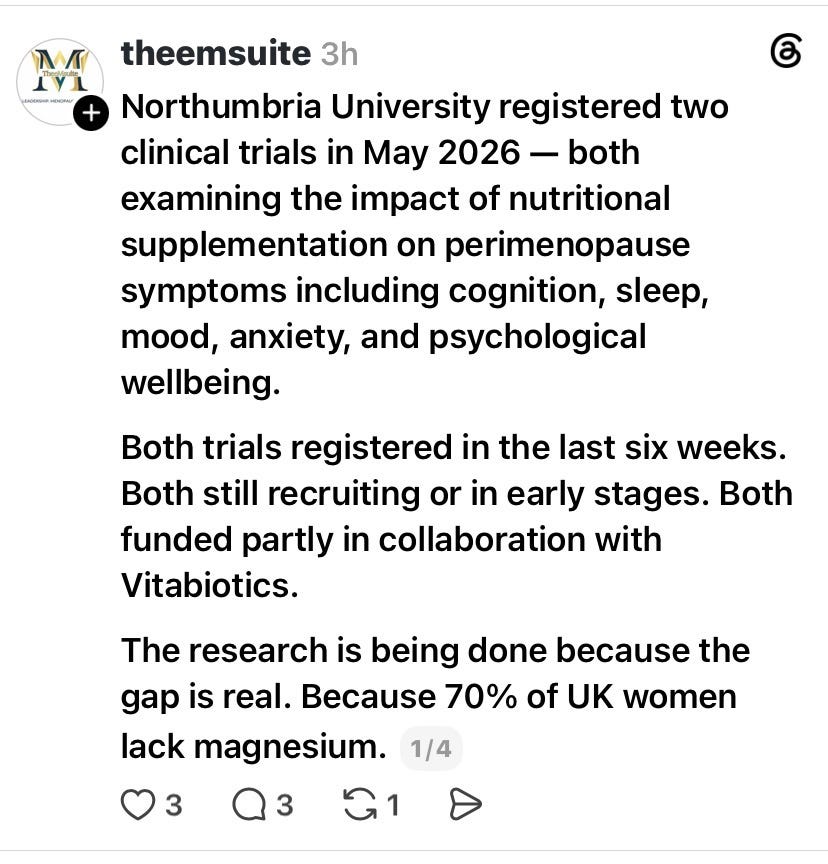
FATIGUE > HOT FLASHES – The Flo app surveyed 17,494 women from 158 countries, providing useful insight into what women say they feel versus what they’ve been taught to expect. The most recognized symptoms, published this month in Menopause, the journal of The Menopause Society, were hot flashes (71%), sleep problems (68%) and weight gain (65%). However, among women 35+, the most common self-reported symptoms were fatigue (83%), physical and mental exhaustion (83%), and irritability (80%). There is a huge disconnect emerging here, and I can’t help but think there might be a bit of gaslighting going on: consider the cultural script (hot flashes are the worst part of menopause; hormone therapy treats hot flashes) compared to a lived reality (bone-deep tiredness that is a lot more complicated and with multiple possible root causes, including life stress).
RESISTANCE TRAINING – New research tracking 117,025 women for more than 14 years as part of the long-running Nurses’ Health Study out of the UK provides even more incentive to lift weights for your heart. Published in the Journal of the American College of Cardiology, the study found two or more hours of resistance training a week was linked to a 20% lower risk of major cardiovascular disease and a 44% lower risk of heart attack versus no strength training, with each additional weekly hour tied to a further 5% drop in CVD risk. Benefits held after adjusting for BMI and were additive to aerobic exercise. Context: this is observational research, and the Nurses’ Health women are famously health-engaged – meaning healthy user bias is a factor. For more on what’s real and what’s not in this realm, check out the Hotflash inc Podcast episode with McMaster University’s protein and muscle expert Stuart Phillips.
HOT FLASHES – The first real-world data on the non-hormonal treatment fezolinetant – brand name Veozah – is in and it has demonstrated an improvement in hot flashes, according to a press release from the US Endocrine Society. The OPTION-VMS study (656 women) builds on drug-development clinical trials, and found hot flashes and/or night sweats significantly improved from pre-treatment to four, eight and 12 weeks, along with improvements in depressive and anxiety symptoms. Women taking other non-hormonal drugs, including SSRIs/SNRIs, also saw improvements. Context: the study is sponsored by the makers of Veozah, Astellas Pharma; also, the FDA has issued a boxed warning for this drug.
SUPPLEMENTS – A new supplement called MenoRelief launched this month, promising to hit sleep, mood, sexual health and cortisol all at once. I’m always skeptical of a product that aims to tackle so many things. But this one offers an interesting mix of ingredients that are under-used in this space, and the press release’s “evidence-backed” claims stand up for each ingredient. At the heart of the formula is a standardized, bioactive form of saffron, paired with a Korean thistle and thyme complex. It also includes passionflower for its calming and sleep-supporting properties. I can also personally attest to the power of saffron and passionflower for sleep and mood. (A bottle is on its way to me right now, so stay tuned.)
What I’m Loving
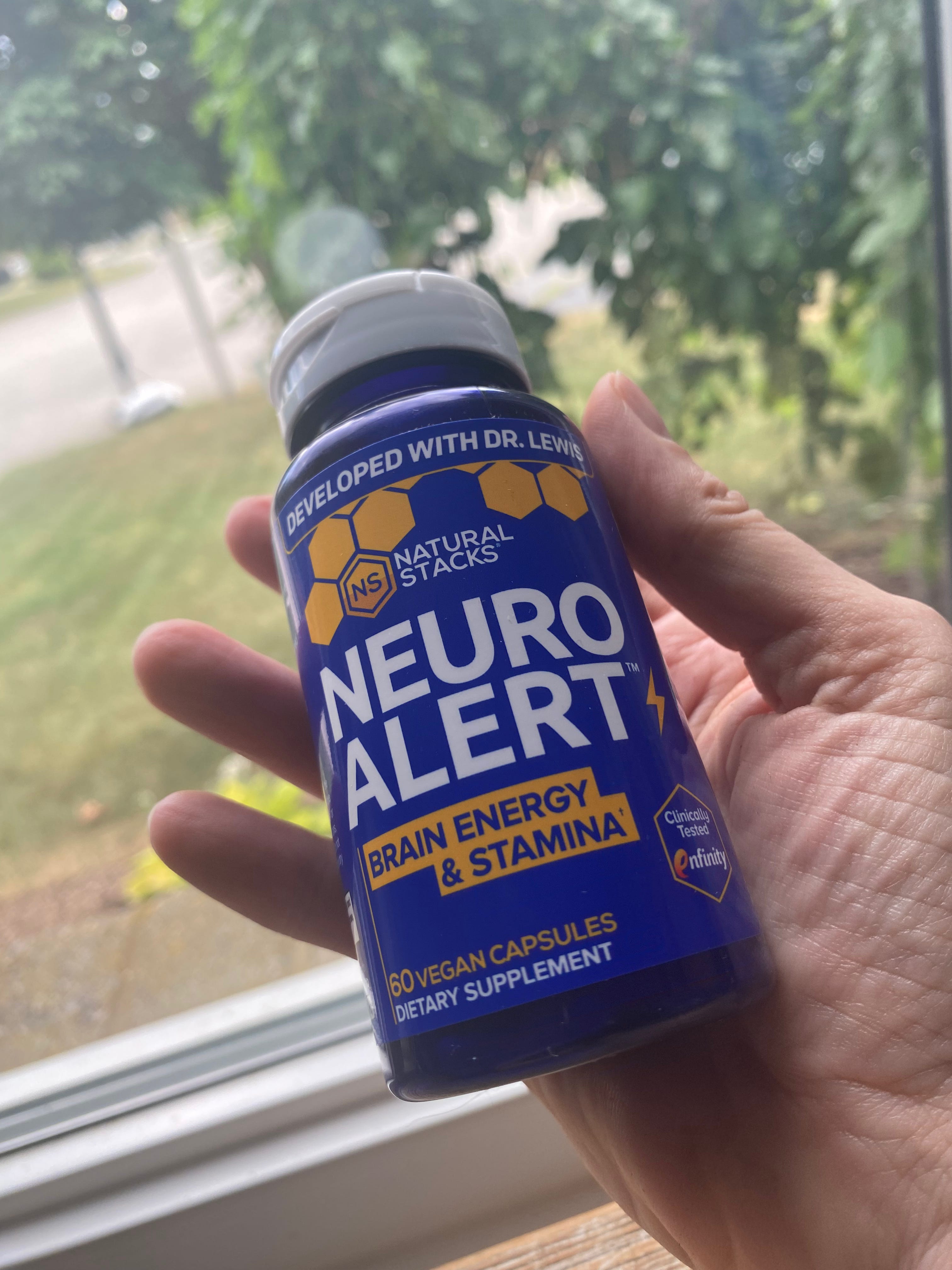
This is a brain energy and cognitive stamina supplement and man did it work for me yesterday. I fired through this entire newsletter, staying way too long in a London, Ontario Starbucks, humming along like a chair-bound Energizer Bunny. The sharpness it produced reminded me of the nicotine patches I wore as part of my long Covid recovery, and how they were able to cut through the debilitating brain fog that came with it. The formulation’s base is 200 mg of enfinity® Paraxanthine, a caffeine metabolite that has been studied in multiple clinical trials, providing clean mental energy without the crash. NeuroAlert also includes L-Tyrosine, L-Theanine, and NADH, (Nicotinamide Adenine Dinucleotide), all of which combined in my brain for a cognitive boost and lots focus. I like this company because they use quality ingredients in innovative ways and conduct independent, third-party testing. Get 15% off your order with code HOTFLASHINC.
menomoirn.
/ˈmen·ə·mwär/ · noun
This is officially now an academic term for the booming genre in celebrity writers, according to the Celebrity Studies journal. Researchers who studied it gave the menomoir credit for smashing stigma, but also found that authors tended to use “healthist frameworks like longevity discourse to shift the burden of health to the individual and downplay systemic factors”. The truth is menopause is personal and structural, and both research and care continue to fail all women, but particularly women of colour who live on socioeconomic edges. We aren’t likely to hear much from a single working mom pulling double shifts as an Uber driver at night to make ends meet, which is a shame. Now that is a book I’d read.
POP CULTURE

“The best portrayals I’m seeing right now are not about generic hot flashes or about a woman feeling ragey or hormonal. It’s about identity. Sometimes it’s about grief; sometimes it’s about power. But I think the most important thing it’s about is the truth, and we avoided the truth for a long time when it comes to women.”
– Tamsen Fadal, the author of the best-selling book How to Menopause and an executive producer of the 2024 documentary The M Factor, to the New York Times in TV Shows Are Changing How Menopause Is Portrayed Onscreen.
I was truly interested in how theYour Friends & Neighbors character Mel (played by Amanda Peet) was written and performed as she struggled through a mad menopause over the two seasons of the show. I loved that the arc focused a lot on Mel’s va-vulva problems, including an aborted encounter with a date over vaginal dryness that led to confiding in her sister-in-law, who promptly handed over a bottle of purse lube. Mel’s growth along the way – in fits and starts – was demonstrated in honesty, when she told a new lover she wasn’t sure how her body was going to respond. That is edgy. Near the end of the second season she mentioned going on hormones, as the friends she confided in had advised her to do. Yet in the last show, she was shown gazing at a row of supplements. The most prominent items were a bottle of DHEA, an alternative and less-studied form of hormone therapy, and Bonafide’s Clairvee, a vaginal probiotic that rebalances the vaginal microbiome and helps with odor, itching and discharge. I checked with Bonafide, and they report the placement was “earned”, meaning the production staff at the Apple TV show reached out after doing their own research. Full disclosure: Bonafide is one of the companies I work with here at Hotflash inc, and the reasons for that is their clinical trials, their ongoing, independent, third-party testing, and an accessible price point. Use code ANNMARIEMCQUEEN to get 20% off.
Editor’s note
Reading: Chill and Prosper: The New Way to Grow Your Business, Make Millions and Change the World by Denise Duffield-Thomas. Until I read the first chapters, not one business book has been able to explain to me why some growth challenges fill me with such paralyzing existential fear and dread.
Using: The Daily 20 Challenge, Sweat app. I’ve struggled with regular movement since multiple bouts of Covid starting in February 2025 led to all sorts of complications. One sweaty workout would feel good, then flatten me for days. The recovery is going well (I’ll write about it soon) and starting slowly and building with these 20-minute strength and cardio workouts a few weeks ago has been key.
Watching: When I watched my friend Lizzie Bermudez crying with her sisters after watching Voicemails for Isabelle on Netflix, I knew it was for me. It’s a much smarter rom-com than most. And you get the good cry.
AMx
» If you order any of the products listed in this email, Hotflash inc may receive a commission. Check Products to ensure they ship to your region.
» This newsletter is for educational purposes only and not to be used or considered as medical advice.

I had a conversation with Amy Mile on the Down There Aware podcast about this. Especially true for those of us who live in the Menopause Bubble. Sometimes a bad day is just a bad day and creating an entire persona for a woman that restricts her to just being menopausal removes her agency to be anything else.
Love this. Thank you. Given the number of ridiculous things going on at the moment, I'm at the point where I'm just leaning into it and blaming everything on perimenopause. Flat tyre? Definitely perimenopause. Dropped a plate? Absolutely. Swore at the parking inspector?.... Actually, that one probably was perimenopause.