

Weekend roundup: Vavulva 'estrogen or no estrogen' (or both?) edition
Plus social media beefs, brain science that made me exhale and more


Do you need estrogen to avoid genitourinary syndrome of menopause (GSM) and have a healthy vavulva after menopause?
This is a question I ask myself a lot.
We know this is an under-treated condition and that it can be dangerous – increasing the risk for UTIs and associated problems in old age. And we are told over and over that by mainstream medicine that vaginal estrogen is the gold standard for safe and effective remedies.
I’m sharing this now because I have two new pieces of research to present – both telling a different story.
VAVULVA–ESTROGEN – A new paper published in the April edition of Maturitas explores the biological basis for a “window of opportunity” in treating GSM.
Important note: I’ve only reviewed the abstract, so I don’t know how many individual studies were included in this narrative review or how robust the total evidence base is. I do know the authors examined how estrogen receptors in vaginal and vulvar tissue change with age and menopause. After menopause, one type of receptor – ER-alpha – predominates, likely because ER-beta is lost over time.
Experimental models suggest that when estrogen therapy is started immediately after estrogen levels drop, tissue structure and receptor expression can be restored. However, delayed treatment appears to lead to weaker responses and potentially irreversible tissue changes, including collagen loss, reduced blood flow, nerve changes and inflammation.
Clinical data reviewed in the paper suggest that starting vaginal estrogen earlier may improve effectiveness. The authors propose that receptor-targeted therapies – started early and used in a sequential framework over time – may help prevent tissue thinning, shrinkage and dryness that some women experience.
They also call for more research that specifically looks at time since menopause and long-term safety.
HF Inc hot take: This research is important, and it places estrogen is the only question worth asking – and the only answer to be found. Before you get angry with me, just read on…
VAVULVA–RADIOFREQUENCY – A new randomized sham-controlled trial suggests that a nonhormonal treatment – nonablative radiofrequency – may help improve vaginal health and sexual function after menopause.
In this trial 62 postmenopausal women with GSM received either six weekly radiofrequency sessions or a sham procedure.
The women who had the real treatment reported significantly better sexual function – including improvements in lubrication, orgasm and pain – and showed measurable improvements in vaginal tissue health. These benefits were still present three months later with no adverse events reported.
Radiofrequency treatment is typically delivered using a small wand-like device inserted gently into the vagina in a clinical setting. The device emits controlled electromagnetic energy that warms the tissue without burning or removing any surface layers. The gentle heat stimulates blood flow and collagen production, helping tissue become more hydrated and elastic.
Importantly, the treatment did not change estrogen levels in the vaginal tissue – this is a nonhormonal mechanism.
This was a small trial, and longer-term studies are still needed. It also doesn’t address the UTI issue; another area for future research (on the premise that healthier tissues = less chance for UTI). But for women who cannot or prefer not to use vaginal estrogen, this research suggests that radiofrequency may be a promising option.
➤ If you want to go deeper on the topic of vulvas, Dr. Sara Szal has written a great article about The Vulva Gap – and she’s talking about four hormones.
(Apologies: last week autocorrect changed Dr Szal’s name to “Small” 🤦♀️)
🍿 Social media 🍿
Kim Anami vs perimenopause parody
If you missed it, last week People covered how comedian Matt Hyams went viral for impersonating his perimenopausal wife, which involves putting a wig on and acting entitled and annoyed at his expense.
Now he has a deal with MIDI Health.
Enter sex and relationship coach and vaginal weightlifter Kim Anami, who seems to have vowed to agitate the entire Menopause Industrial Complex this year. She thinks that when it comes to Matt and his wife, something else is going on, in the bedroom.

Nurse practitioner vs Doctor Menopause Gurus
So many doctors are doing such good things online. But I’ve been frustrated for awhile at some of what the big voices (DMGs) confidently say on social media and in their comment section. It would be nice if there was some oversight for this, given the amount of extreme white coat worship going on in the menopause space. (A few could certainly could do with a briefing on how to take posts down or make a corrections.) Boston-based nurse practitioner Magen Price, who has a small but mighty Instagram following – that might not get bigger if she keeps up this kind of truth-telling – called it all out brilliantly.

Hotflash inc Podcast 🎙️

This conversation made me feel a lot better about my brain. Thank goodness for Australian neuroscientist Dr Sarah McKay. (She also talks about what it was like to be on The Mel Robbins Podcast). It’s long, but I promise you: the entire thing is worth a listen. Also: Dr McKay wants to get the word matrescence, describing the physical, psychological and emotional process of becoming a mother, added to the dictionary. You can support those efforts here.
Sponsored
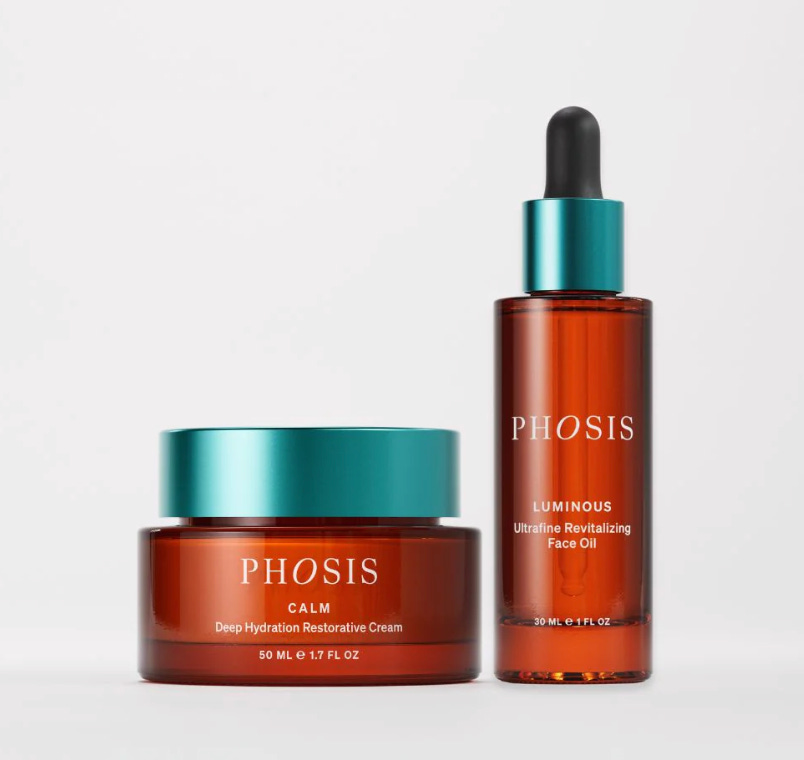
A big thank you to Phosis for being a gold sponsor of the first-ever Hotflash inc Summit. Phosis is obsessed with repairing, restoring and replenishing your dry and sensitive, hormonal skin. Exceptionally clean and clinically-proven. HOTFLASHINC to get 15% off at Phosis.com
Quick hits ⚡️
“I’m now on progesterone pills and an estrogen patch, which I’m not going to show you.”
– Cheryl Wischhover nails all my squidgy feelings about this trend at Good for Your Age in The Estrogen Patch Influencers Are Here: #PostYourPatch: raising awareness and profits at the same time?.
“Sarcopenia, defined as a reduction in muscle mass and function, is a critical issue in patients with obesity treated with GLP-1 RAs, particularly in older adults.”
– Chloe Amouyal Galand, MD, PhD, from Assistance Publique–Hôpitaux de Paris, Diabetology Department, La Pitié Salpêtrière–Charles Foix University Hospital in Paris, France, at French Nutrition Days 2025 in Lyon, France.
“It’s about time the FDA got to it.”
– Marion Nestle, professor emerita of nutrition, food studies and public health at New York University, on the move to ban butylated hydroxyanisole (BHA), which has been used in the food supply for decades but was identified in the 1990s by the federally funded National Toxicology Program as “reasonably anticipated to be a human carcinogen” based on animal studies and has been listed as a known carcinogen under California’s Proposition 65. Covered by NBC News.
“Bonafide Health, LLC has expanded its portfolio of menopause-focused supplements with the launch of Noctera, a hormone-free, melatonin-free formulation designed to improve sleep quality and duration in women experiencing hormonal changes.”
Nutritional Outlook reports. (Use code HOTFLASH to get 20% off at Bonafide)
“Improving neurological health requires targeting mitochondrial dysfunction through lowered linoleic acid intake, gradual gut repair, reducing electromagnetic field and plastic exposure.”
– Dr. Joseph Mercola breaks down the new JAMA Neurology study that found 54.2 percent of Americans – around 180.3 million people – live with at least one neurological disorder. Read his take here.
“Women have been rightfully complaining that they have not been listened to and that they deserve good medical care. But in my opinion, it’s not good medical care to sell a cortisol support supplement, sell compounded GLP-1s or promote inadequately studied estriol face cream. It is hypercapitalism designed to be more efficient at extracting wealth from women.”
– Dr Jen “Lasso of Truth” Gunter, continuing to take aim at the recently $1 billion valued menopause unicorn MIDI Health in The Vajenda.
“Our findings are encouraging, suggesting that consistently engaging in a variety of mentally stimulating activities throughout life may make a difference in cognition.”
– Study author Andrea Zammit of Rush University Medical Center in Chicago on her Neurology study that found reading, writing and other intellectually stimulating activities can reduce your risk of Alzheimer’s by 40 percent and lead to a slower rate of cognitive decline later in life.
Editor’s note
One of the nicest things you can do for a friend who has lost a parent is to remember the anniversary of the loss. For some reason, that day and the days around it can be very heavy. I am lucky to have three people in my life who did just that this week.
AMx

For a more nuanced look at the current landscape, what about an All Access Pass to the Hotflash inc Summit? You get lifetime access to all 40 videos, as well as Hotflash inc Summit Book of Knowledge (top takeaways from all the interviews) and for just one more week, my guide to navigating all the gaps in hormone therapy information. What you don’t get? Fear. I made sure of it.
» If you order any of products listed in this email, Hotflash inc may receive a commission. Check Products to ensure they ship to your region.
» Hotflash inc is for educational purposes only and not to be used or considered for medical advice.
Your roundups keep us ‘in the know’ without the hype - love it.
More importantly, are you still safe where you live? 🙏🏻
As usual, I love your roundups. Just wanted to say that I’m with you in the grief. I just lost my father a couple of months ago, and while our relationship was complicated, the grief is still there. When I lost my mom, the anniversary of her death always stirred up emotions as well, especially at the one and two year marks. Please take care.